
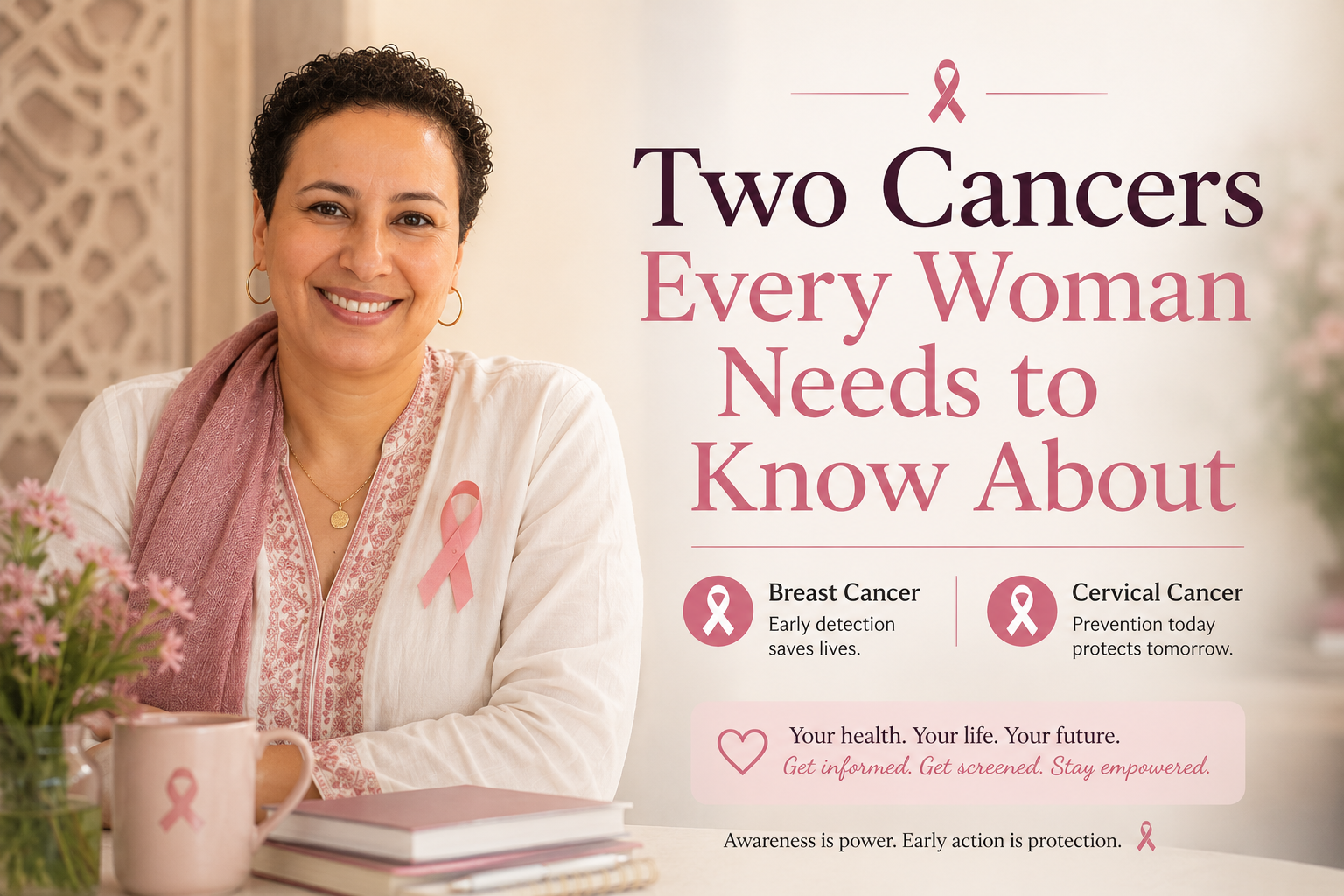
Two Cancers Every Woman Needs to Know About

Breast Cancer: What We Know
Breast cancer is the most commonly diagnosed cancer in women worldwide, accounting for roughly one in four female cancer cases. In 2022, approximately 2.3 million new cases were recorded globally, with around 665,000 deaths. It is the leading cause of cancer death among women in 110 countries. According to the International Agency for Research on Cancer (IARC), on average 1 in 20 women worldwide will be diagnosed with breast cancer in her lifetime. If current rates continue, by 2050 there will be 3.2 million new breast cancer cases annually, and 1.1 million deaths per year.
The African and North African Reality
The numbers look very different depending on where you live, and not in a way that protects us. In high-income countries, 83% of women diagnosed with breast cancer survive. In low-income countries, more than half of women diagnosed die from the disease. In Africa, nearly half (47%) of breast cancer cases are diagnosed in women under the age of 50, compared to only 18% in North America and 19% in Europe. Our cancers arrive younger, and they are caught later. Africa records the highest mortality-to-incidence ratio in the world at 0.510, meaningthat for every two women diagnosed, one dies. In Europe, that ratio is 0.20. Women in lower Human Development Index (HDI) countries are 50% less likely to be diagnosed with breast cancer than women in high-HDI countries, not because they are protected, but because they are not screened. And they are at far higher risk of dying from it when it is finally found. In 2022, Africa recorded an estimated 198,300 new breast cancer cases and 91,300 deaths. By 2050, cases on the continent are projected to exceed 1.1 million per year.
Why Survival Rates Differ
The gap in survival between countries is not primarily a biological one. It is a gap in access, to screening, to diagnosis, to treatment, and to information. Breast cancer mortality is twice as high in Ethiopia as in the United States, despite a 60% lower incidence rate. The cancer is less common, but far more likely to kill. Late diagnosis is a defining feature of the African breast cancer experience. In sub-Saharan Africa, nearly one-third of breast cancer cases are diagnosed at advanced stages, compared to just 5% in Europe and North America. Advanced stage at diagnosis dramatically reduces survival rates and treatment options.
Risk Factors Worth Knowing
The established risk factors for breast cancer include family history, BRCA1 or BRCA2 gene mutations, early onset of menstruation, late menopause, having no children or having a first child after 30, and obesity. Alcohol consumption is also a known risk factor. However, the majority of breast cancer cases occur in women with no obvious risk factors. This is why screening, not just self-awareness, is essential.
Cervical Cancer: What We Know
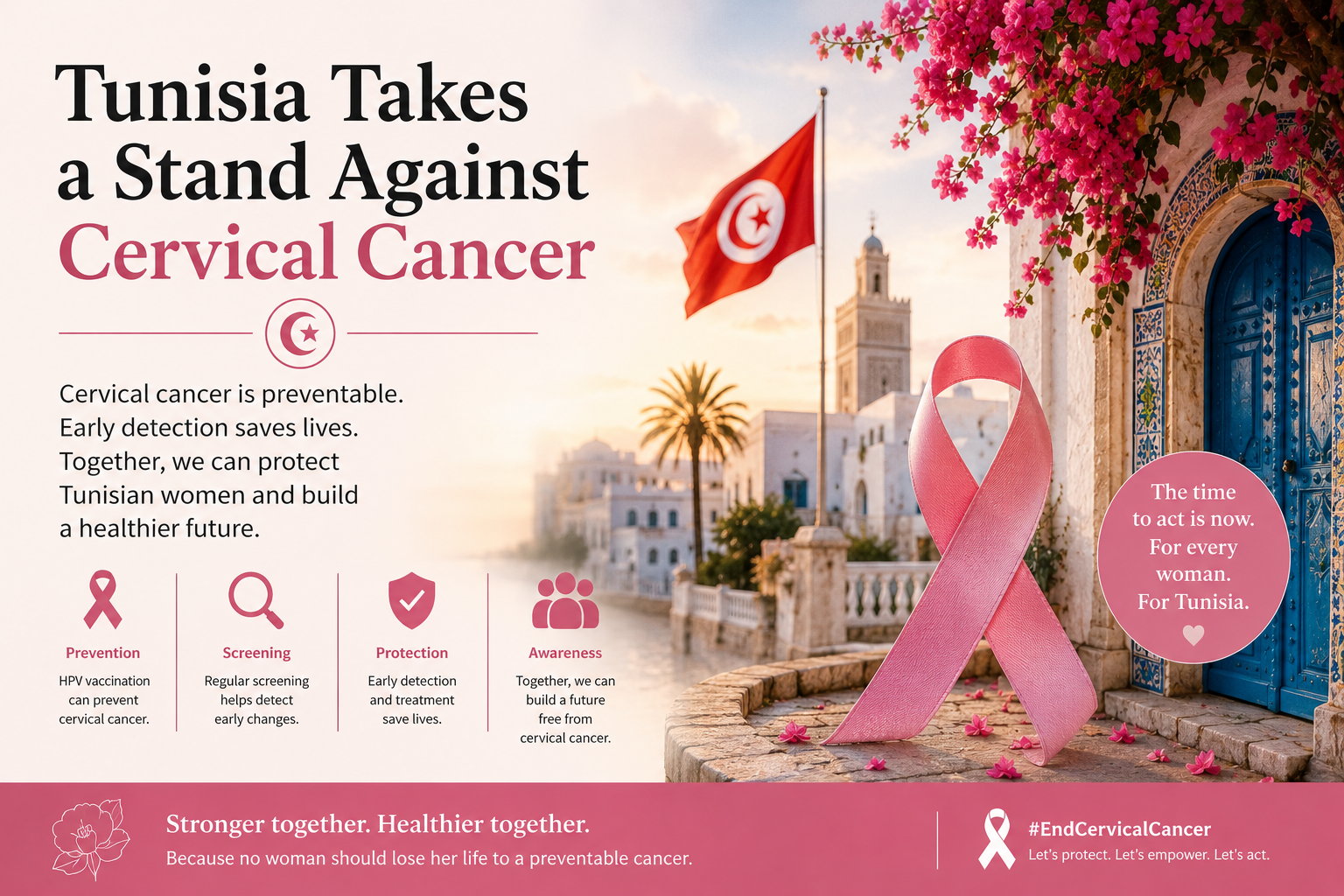
Cervical cancer is the fourth most common cancer among women globally. In 2022, there were an estimated 661,000 new cases and 348,000 deaths worldwide. Unlike breast cancer, cervical cancer has a clear, known cause: nearly all cases are caused by persistent infection with high-risk strains of the human papillomavirus (HPV). This means cervical cancer is, in principle, one of the most preventable cancers that exists. And yet it continues to kill hundreds of thousands of women every year, almost exclusively women in lower-income countries.
An Inequality Written in Data
The disparity in cervical cancer between high-income and low-income countries is among the starkest in global health: 85% of cervical cancer deaths occur in developing countries. The death rate is 18 times higher in low- and middle-income countries compared to wealthy nations. Mortality rates are six times higher in low-HDI countries than in very high-HDI countries . Cervical cancer is the most common cancer in 25 countries, the vast majority in sub-Saharan Africa, and the leading cause of cancer death in 37 countries. Research shows that a significant increase in the Gender Inequality Index is associated with a 42% increased risk of dying from cervical cancer. Gender inequality is not separate from cancer outcomes. It shapes them directly. Low- and middle-income countries account for 94% of global cervical cancer deaths.
The Prevention Gap
Here is what makes cervical cancer's death toll particularly painful: it is largely preventable. The HPV vaccine is up to 90% effective at preventing the strains of HPV that cause cervical cancer. Yet globally, only 15% of eligible girls have received it, with coverage as low as 1% in parts of Central and Southern Asia. Only 36% of women worldwide have ever been screened for cervical cancer. In some countries, that figure drops to 4%. In Sweden and the Netherlands, it approaches 100%. Regular Pap smear or HPV testing can detect pre-cancerous changes in the cervix years before they develop into cancer, giving women a real opportunity to prevent the disease entirely, if they have access to screening.
Who Bears the Burden
UN Women has noted that adolescent girls in the least developed countries are at particular risk of missing critical preventive services, including the HPV vaccine, because reproductive health services for young women are underfunded and underprioritized. The connection between adolescent reproductive health, access to vaccination, and cervical cancer outcomes is direct. UN Women has also documented that women comprise 67% of the global health workforce but face a 24% gender pay gap and are systematically excluded from healthcare leadership. When women are not in leadership in health systems, women's health needs are consistently de-prioritized, including cancer prevention and screening.
What Both Cancers Share
Despite being different diseases, breast cancer and cervical cancer share a common pattern across our region: they are caught late, treated inadequately, and discussed too little. They share something else, too. Both cancers are shaped not just by biology but by the conditions of women's lives, by access to information, by whether a woman feels permitted to seek medical attention, by whether she can afford it, by whether the healthcare system she reaches will take her seriously, and by whether anyone in her community has spoken openly enough that she knows what to look for. UN Women has documented that women's symptoms are more likely to be misread and their conditions diagnosed too late. This is not incidental. It is the result of medical systems and information landscapes that were not designed with women's bodies and women's realities at their centre. Data that underrepresents women, including, increasingly, the AI tools being used in healthcare, continues to shape how diseases are studied, diagnosed, and treated. The consequences fall heaviest on women who were already furthest from the centre of those systems: women in lower-income countries, women in rural areas, women whose language and culture are absent from dominant health information platforms.
What You Can Do
For breast cancer:
- Perform a breast self-examination every month
- Seek clinical breast examination by a healthcare provider regularly
- If you are 40 or older, ask about mammography screening in your area
- Know your family history and discuss it with your doctor
- If you notice any changes, a lump, changes in skin texture, nipple discharge, or unexplained pain, seek medical attention without delay
For cervical cancer:
- Ask about HPV vaccination if you or your daughters have not yet been vaccinated
- Get screened regularly, a Pap smear or HPV test can detect pre-cancerous changes early
- Know that cervical cancer in its early stages often has no symptoms, screening is theonly way to catch it before it becomes dangerous
- If you notice unusual bleeding, discharge, or pelvic pain, seek medical attention
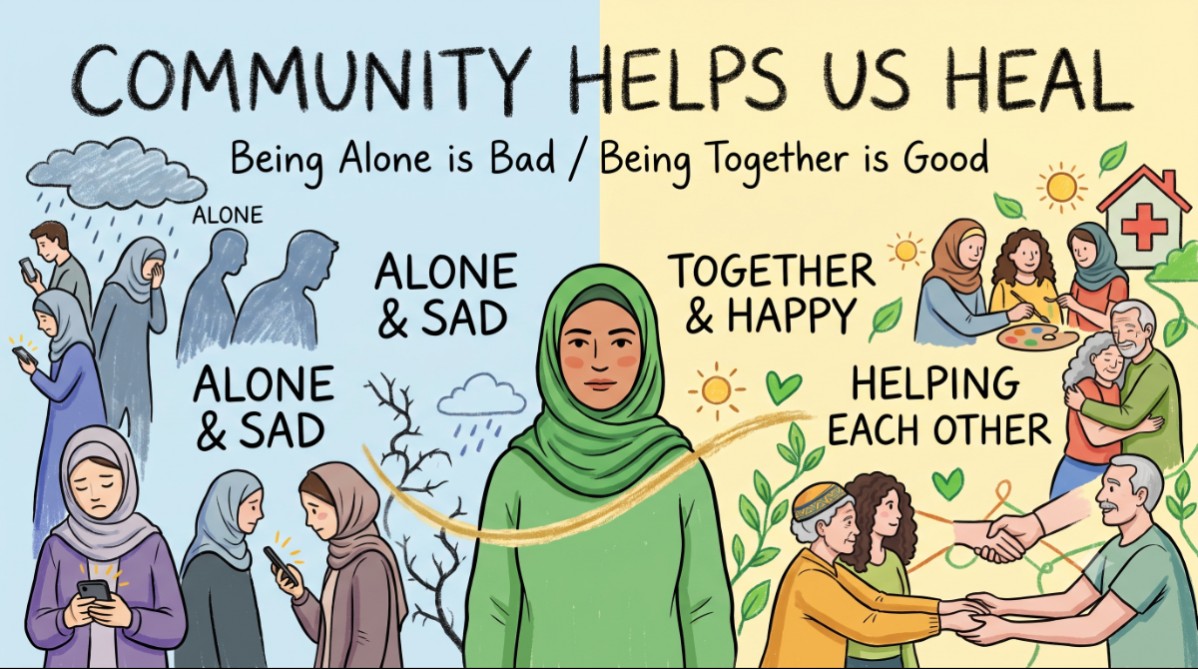
- For both: Talk about it. With your sisters, your friends, your daughters, your mothers. The silence around these cancers costs lives. Breaking it is an act of care.
Sources & Further Reading
- World Health Organization (WHO), Breast Cancer Fact Sheet
- WHO, Cervical Cancer Fact Sheet
- IARC / WHO, Global Cancer Burden 2024
-cancer-burden-growing--amidst-mounting-need-for-services IARC, Breast Cancer Projections to 2050 (Nature Medicine, 2025): https://www.iarc.who.int/wp-content/uploads/2025/02/pr361_E.pdf
UN Women, Six Uncomfortable Truths About Women's Health: https://www.unwomen.org/en/articles/explainer/six-uncomfortable-truths-about-womens-health