
I Was Diagnosed With Cancer. I Built the Platform I Wished Had Existed.
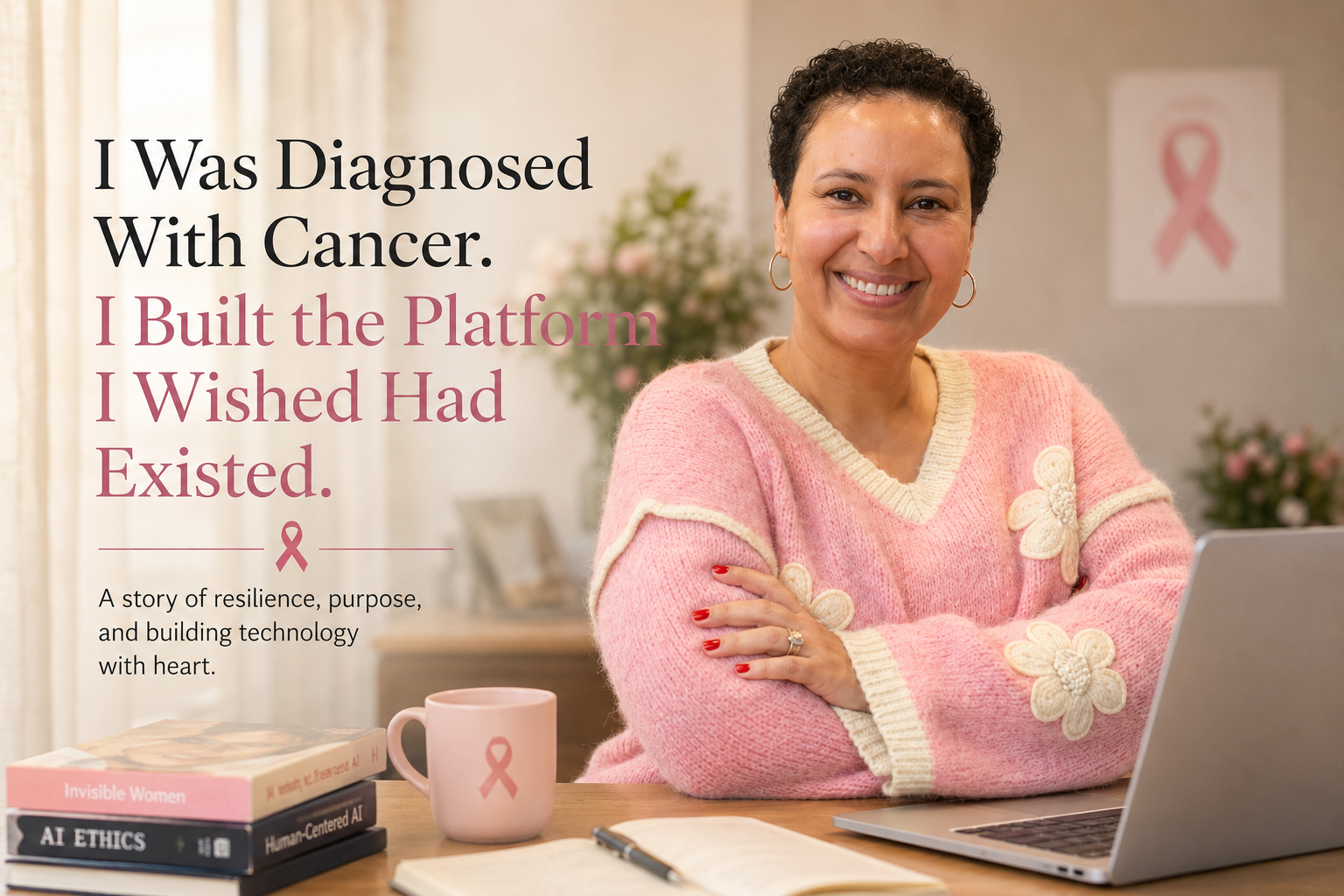
There is a particular kind of loneliness that arrives not with the diagnosis itself, but in the hours and days that follow, when you begin searching for information and find that nothing you find quite speaks to you. The language is wrong. The assumptions are wrong. The bodies described are not your body. The lives implied are not your life. I know this loneliness well.
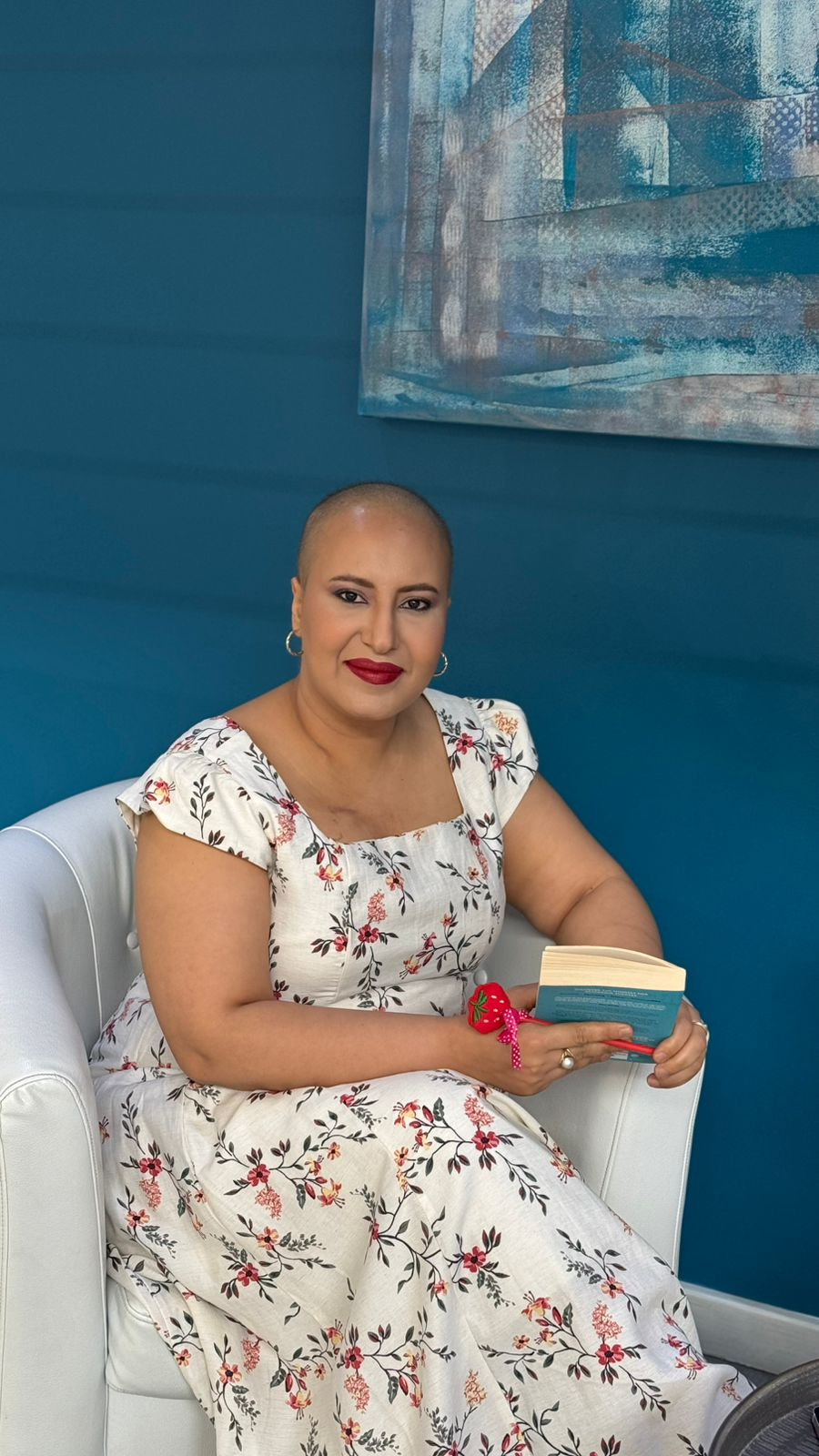
I am Maha Jouini, a Tunisian author, AI policy expert, and human rights defender. I was 38 years old when I was diagnosed with stage-two hormone-driven breast cancer. I was single, without children, living in a social and economic context where illness carries weight far beyond the clinical, where a diagnosis can fracture employment, family relationships, financial stability, and social standing, often all at once. I was also, by profession, one of the leading voices in Africa on the ethics of artificial intelligence. I understood, perhaps better than most, what it means when the systems designed to serve us are built on data that was never meant to include us. What I could not have fully anticipated was how acutely I would feel that exclusion from the inside.
What the Diagnosis Revealed
Illness has a way of making abstract injustices suddenly, sharply concrete.
I had spent years analysing how AI systems deployed across African contexts carry embedded assumptions drawn from elsewhere, that individuals have legal protections, social safety nets, and a form of individual autonomy that simply does not map onto the realities of most women's lives in North Africa. I had written about it, spoken about it, built policy frameworks around it. Then I lived it.
My medical reality entered automated systems, in employment, insurance, financial services, and was quietly translated into something else entirely. Not a woman navigating illness. A risk signal. A liability marker. Medical leave became a data point. Ongoing treatment became a flag. The illness itself, already a rupture in my professional, social, and financial life, was compounded by algorithmic decisions made by systems that had never been designed to see me. When I sought fertility preservation before chemotherapy, knowing that treatment can destroy up to 80% of ovarian reserve, I discovered I needed formal institutional authorisation to make a decision about my own body and my own future. In a region where a woman's reproductive life is still treated as something mediated by medical, legal, and social authority rather than belonging to herself, this was not a bureaucratic inconvenience. It was a structural condition. And when I turned, as anyone in crisis turns, to search for information, community, and guidance, I found that the dominant health information landscape had not been built for me. Not in its language, not in its cultural assumptions, not in its understanding of what a North African Arab Muslim woman's life actually looks like when illness enters it.
Chiffa began as an answer to that absence.
What Chiffa Is
Chiffa, the Arabic word for healing, Ø´Ùاء, is my solution.
Not a concept. Not a project I plan to build one day when I am better, when conditions are easier, when the time is right. A platform I am building now, from inside the experience, because I know with precision what is missing and I am not willing to wait. Chiffa is a health platform built specifically for women from North Africa and the Arab world. Not adapted, not translated, not retrofitted from somewhere else, built for us, from the beginning, with a real understanding of what our lives are actually like. It understands that illness in our region is not a private medical matter. It is a social event, with consequences for family, for employment, for the way a woman is perceived by her community. It understands that a woman searching for information about her breast cancer diagnosis in Algiers or Tunis or Casablanca is not the same as a woman searching in Amsterdam or Toronto, and that pretending otherwise does not serve her. It abandons her. Chiffa holds what the mainstream health information landscape does not: the complexity. The stigma. The financial precarity. The family dynamics. The religious dimensions of care and decision-making. The particular courage required to be ill and unmarried and navigating all of this without the social structures presumed to protect women who fit prescribed roles. It is, in the deepest sense, a platform that sees the women it serves, because it was built by one of them.
Why This Matters Now
I am not building Chiffa in isolation from the larger forces reshaping African healthcare. I am building it in the middle of them, with full awareness of what is at stake. The African AI healthcare market is projected to grow from USD 6.85 billion in 2025 to USD 21.47 billion by 2031. AI is being deployed at scale across diagnostics, insurance, employment screening, and financial services, across the same systems that, during my own illness, translated my vulnerability into risk. If this expansion happens without governance frameworks that account for the specific realities of women with serious illness in North Africa, it will not be neutral. It will formalise existing exclusions under the appearance of technical objectivity. My work in AI ethics and digital policy, and my life as a patient inside this very system, are no longer separate things. I no longer have the option of analysing from a distance. I am inside the data. I am the woman the system failed to account for. And that position, as painful as it is, gives me something I could not have built from the outside: clarity about exactly what needs to change, and exactly who needs a platform that tells the truth about their lives. Chiffa is not a retreat from my policy work. It is the most direct expression of it. It is what happens when you stop waiting for the system to build what you need, and build it yourself.
Why I Am Telling You This
Writing has always been my form of resistance. I fashion it from pain, and from the small, fierce victories over everything that would diminish me. I write because silence is a form of disappearance, and I refuse to disappear. I am a woman who received a serious cancer diagnosis while single and without children, in a social context that penalises all of these things. I have navigated algorithmic discrimination, institutional gatekeeping of my own reproductive choices, and the isolation of being ill in a world whose information systems were not built to hold me. I am not telling you this for sympathy. I am telling you because you may be living some version of this too, or you may know a woman who is, and you deserve to know that someone is building something for you. Not for a generalised patient. Not for a Western medical subject. For you, specifically. For the woman whose illness arrives inside a life that the dominant health infrastructure has never quite managed to see. That is Chiffa. And it is why I am here.