
The Role of Community in Healing How the people around a woman with cancer can either deepen her isolation or transform her recovery
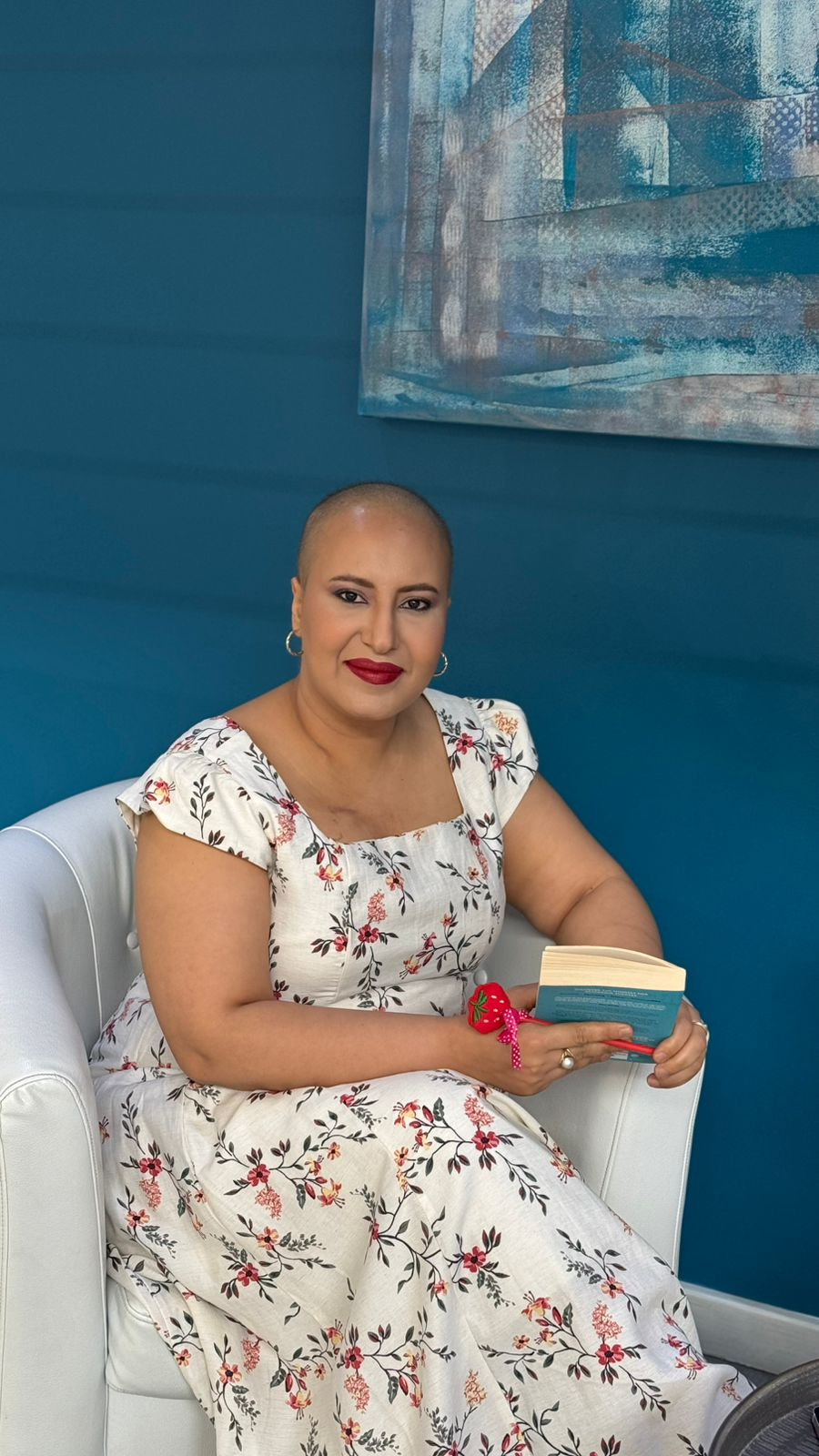
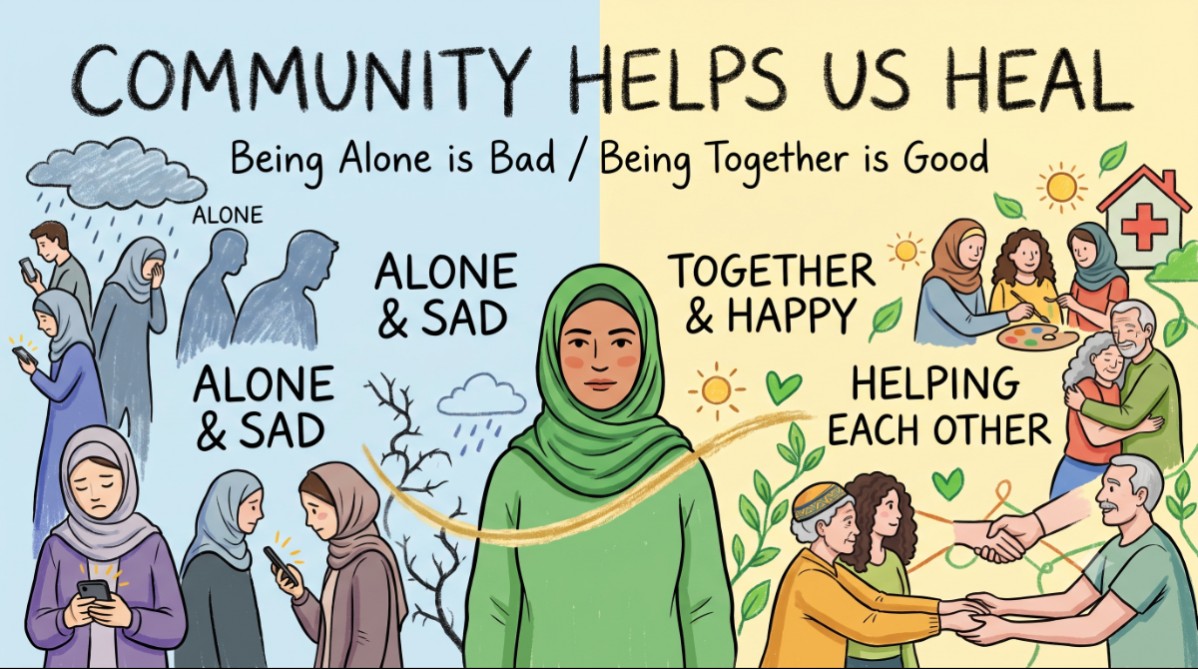
There is a truth I keep returning to when I think about illness: medicine can treat the body, but it takes community to help heal the person.
Cancer is never experienced by the patient alone. It is lived inside relationships, inside families, friendships, neighborhoods, WhatsApp groups, prayer circles, waiting rooms, and the quiet conversations that happen late at night when fear becomes harder to hide.
Around every woman with cancer, there is usually some kind of community. Sometimes that community carries her. Sometimes it fails her. Sometimes it asks her to be brave in ways that make healing harder, not easier.
I want to talk about something that health statistics rarely know how to measure: the invisible infrastructure that holds women together during illness. The friend who comes to chemotherapy with you and knows not to ask too many questions. The sister who notices when you are pretending to be stronger than you are. The neighbor who sends food without making you explain yourself. The women who have been through cancer themselves and know what survival costs.
But I also want to ask a harder question: what happens when that community is absent, or when it becomes part of the burden? And what can a project like Chifaa offer when human support is not enough, not available, or not safe?
SUPPORT IS NOT A SOFT EXTRA
Let me begin with something simple but important: social support is not a soft extra in cancer care. It is not decorative. It is not a "nice to have." It can shape how a woman experiences treatment, whether she follows through with care, how she copes emotionally, and whether she feels she is carrying the illness alone.
Community support does many things at once.
It helps with treatment adherence. A woman is more likely to make it to appointments, complete chemotherapy, and follow difficult treatment plans when someone is helping her keep track of dates, organize transport, ask questions, or simply get out of bed on a hard day.
It helps emotionally. Cancer can isolate a woman very quickly, not only because of fear, but because treatment is exhausting, repetitive, and lonely. Community interrupts that isolation. It reminds her that she is still a person, not only a patient.
WHAT ILLNESS CANNOT TAKE AWAY
"Yemchi el zine w tebqa el amara", يمشي الزين و تبقى الامارة
beauty may change, but its trace remains
It is often said of a woman to mean that true beauty never really vanishes; a woman who carries herself with grace stays graceful, whatever happens to her body, whatever the illness takes.
I think of this proverb often when I think about chemotherapy, hair loss, scars, weight change, exhaustion, all the ways cancer tries to convince a woman that she is disappearing. The women around her, the ones who truly see her, are often the ones who refuse to let that story take hold. They are the ones who remind her, in small and constant ways, that who she is was never only in her hair or her energy or her healthy body. The proverb becomes something the community performs, not just something it says, in the way a sister still teases her, the way a friend still asks her opinion on an outfit, the way a neighbor still treats her like herself and not like a diagnosis.
This is, I think, one of the quiet gifts of community during illness: it keeps telling a woman the truth the proverb holds, at exactly the moments she is most likely to forget it.
I think, too, of the way Mahmoud Darwish writes about beauty, never as a single fixed thing, but as something that holds fragility and strength together in the same breath. A woman with cancer can be fragile and strong at once, and neither cancels the other out. She can be the one who cries in the car after an appointment and the one who still shows up for the next one. Community, at its best, does not ask her to choose between these truths. It holds both, the way she does.
THE GAPS THAT COMMUNITY FILLS
And in North Africa, community often does something even bigger than that: it fills the gaps left by formal systems of care.
Because in many parts of our region, psychological support for cancer patients is limited, overburdened, inaccessible, or simply absent. So the work of emotional care is often absorbed by the people around the patient: mothers, sisters, cousins, neighbors, women in the mosque, friends from work, survivor circles, informal support networks that no hospital officially recognizes but that hold enormous weight in practice.
What does that look like?
It looks like the aunt who moves in for two weeks during chemotherapy.
It looks like the brother who drives four hours so his sister can make a hospital appointment in the capital.
It looks like a women's WhatsApp group where people exchange practical wisdom at midnight: which side effects are normal, which clinic is less chaotic, what to pack for radiotherapy, what helped with nausea, which doctor actually listens.
WHERE CHIFAA COMES IN
And that, to me, is one of the deepest inspirations behind Chifaa. Because women are already building digital micro-communities of care, through voice notes, WhatsApp groups, late-night questions, and informal exchanges of survival knowledge.
Chifaa does not begin from the fantasy that technology can invent support from nothing. It begins from the opposite recognition: that women have already created forms of care for one another, and that what is missing is a safer, more reliable, more structured space that protects dignity, improves information integrity, and extends that support to women who may not have it.
These are often called "informal" systems of care. But there is nothing unserious about them. They are highly organized, emotionally intelligent networks of survival built in the spaces where formal healthcare does not fully reach.
In North Africa, community is not simply a supplement to care. For many women, it is part of the care system itself.
By Maha Jouini