
Tunisiaa Takes a Stand Against Cervical Cancer

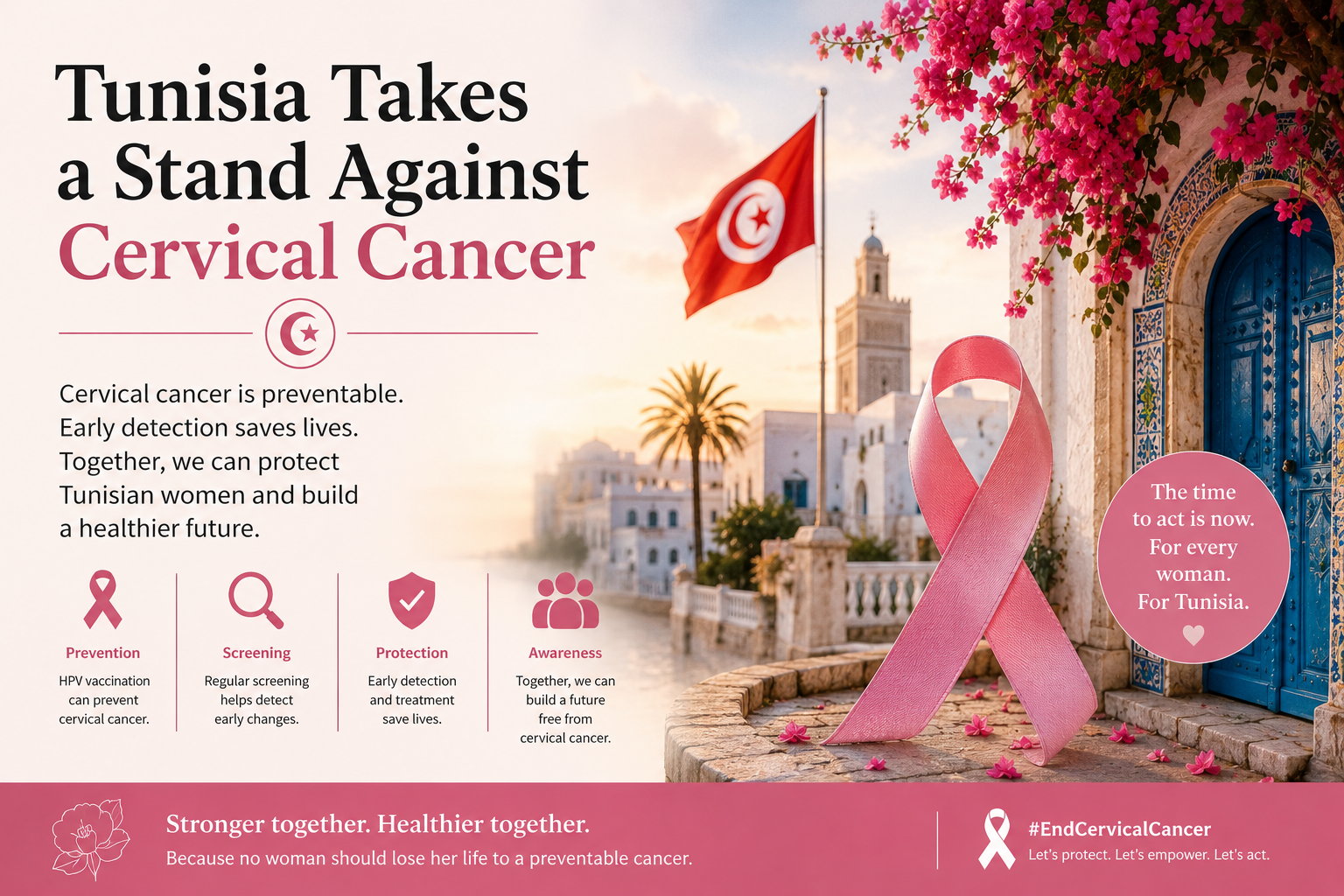
In a defining moment for public health in North Africa, Tunisia has launched one of its most ambitious campaigns yet to eliminate cervical cancer, a disease that remains both preventable and, when caught early, treatable. Through a combination of national vaccination, targeted regional outreach, and a modernizing screening strategy, the country is building a multi-generational defense against one of the world's most common cancers affecting women.
A Historic Step: The National HPV Vaccination Programme
April 2025 marked a turning point in Tunisian healthcare. The Ministry of Health officially integrated the Human Papillomavirus (HPV) vaccine into the national immunization schedule, making Tunisia one of the latest countries in the region to take this critical step. The programme targets 12-year-old girls, an age at which the vaccine is most effective " ” before potential exposure to the virus. Rather than relying on families to seek out vaccination at clinics, the government has adopted a school-based delivery model, sending health teams directly into educational institutions to reach students where they already are. The approach is both practical and equitable: the vaccine is provided entirely free of charge within the public health system, removing financial barriers that might otherwise limit uptake. The ambition behind the programme is long-term. By vaccinating today's adolescents, health authorities aim to dramatically reduce cervical cancer incidence over the coming decades, a legacy investment in the health of the next generation of Tunisian women.
On the Ground in Nabeul: A Regional Campaign in Action
While the national programme sets the framework, one of the most intensive efforts currently underway is taking place in the Gouvernorat de Nabeul. Backed by UNICEF and a network of local civil society organisations, the Nabeul initiative is a masterclass in community-level health mobilisation. Its goal is specific and measurable: raise vaccine acceptance to at least 30% in the region by June 2026. To get there, campaigners are employing a range of targeted tactics. "Vacci-talks", structured dialogues held in schools and health centres, create safespaces for parents and teenagers to ask questions, voice concerns, and receive accurate information directly from health professionals. These sessions are complemented by active myth-busting efforts, designed to counter the spread of misinformation about vaccine side effects through direct, evidence-based communication. Perhaps most notably, the campaign has invested heavily in community mobilisation, recruiting religious leaders, educators, and local influencers as trusted messengers. This recognition that health decisions are shaped by culture, faith, and community trust, not just clinical data, represents a sophisticated and culturally sensitive approach to public health advocacy.
Protecting Those Already Beyond Vaccination Age: The Screening Strategy
Vaccination is the new gold standard for younger generations, but for the millions of adult Tunisian women who came of age before the HPV vaccine existed, early detection remains the most powerful tool available. The national screening programme targets women aged 35 to 59, recommending a check-up every five years. Currently, the primary method is opportunistic cytology, the well-known Pap smear, available free of charge at public healthcare units across the country. However, the government is actively planning a significant upgrade: a transition toward systematic HPV DNA testing, a more sensitive method capable of identifying high-risk cases earlier and more reliably than conventional cytology. This shift, when it comes, will represent another leap forward in Tunisia's ability to catch cervical cancer before it becomes life-threatening.
The Message at the Heart of the Campaign
Across posters, social media, and community sessions, health authorities and their partners are rallying around three consistent pillars:
These messages reflect a deliberate effort to reframe cervical cancer not as an inevitability, but as a disease that Tunisian society has the power to defeat, provided the tools are used.
The Challenge Ahead: Overcoming Vaccine Hesitancy
Despite the momentum, a significant obstacle remains. Recent studies in Tunisia reveal afamiliar paradox: while more than 75% of parents report having heard of the HPV vaccine, a large proportion remain undecided, held back primarily by concerns about side effects. This is not unique to Tunisia. Across the world, awareness alone has proven insufficientto drive uptake. In response, current campaigns are shifting their emphasis toward transparent, doctor-led communication, prioritising trust-building over information-broadcasting. The goal is not simply to tell parents that the vaccine is safe, but to create the conditions in which they feel genuinely heard, and in which medical professionals become credible, accessible partners in the decision. It is, ultimately, a recognition that the hardest part of any health campaign is not thescience, it is the conversation. Tunisia's cervical cancer campaign is still in its early chapters, but the architecture it is building, universal vaccination, modernised screening, and community-rooted advocacy, offers a compelling model for the wider region. The coming years will reveal how well that architecture holds. What is already clear is that the intent, and the investment, are serious.
For more detailed information
on Tunisia's current cervical cancer and HPV vaccination campaigns, you can consult the following official reports and project pages:
Official Policy & National Program Links
Global HPV Prevention Policy Atlas - Tunisia: This is the most comprehensive resource. Itdetails the April 2025 school-based HPV rollout, the national screening guidelines for women aged 35"“59, and current vaccination logistics. VIEW-hub April 2025 Global Report: A formal report verifying Tunisia’s inclusion of the HPV vaccine into its routine immunization schedule as of April 2025. Linked Immunisation Action Network Case Study: Provides a deep dive into how Tunisia prepared for the vaccine launch, including how they integrated local leaders and religious figures into their communication strategy.
Campaign & Awareness Initiatives
UNICEF Nabeul HPV Initiative (2025"“2026): Details the specific USD 150,000 campaign inthe Nabeul governorat, which aims to boost vaccine acceptance to 30% by June 2026 through school dialogues and youth events. Tunis Afrique Presse (TAP) - Ministry Update: A recent (February 2026) press release from the Ministry of Health regarding the long-term effectiveness of the HPV vaccine used in the national campaign.
Civil Society & Digital Health
Alliance For Women and Girls (AFWAG) - Tunisia: Features information on "Medntech," a Tunisian-led organization using AI-powered apps (CerviScanHer) to improve early detection in underserved regions. WHO Cervical Cancer Country Profile - Tunisia: While published in 2021, this provides thebaseline statistical "morbidity and mortality" data that current 2025/2026 campaigns are working to reduce.